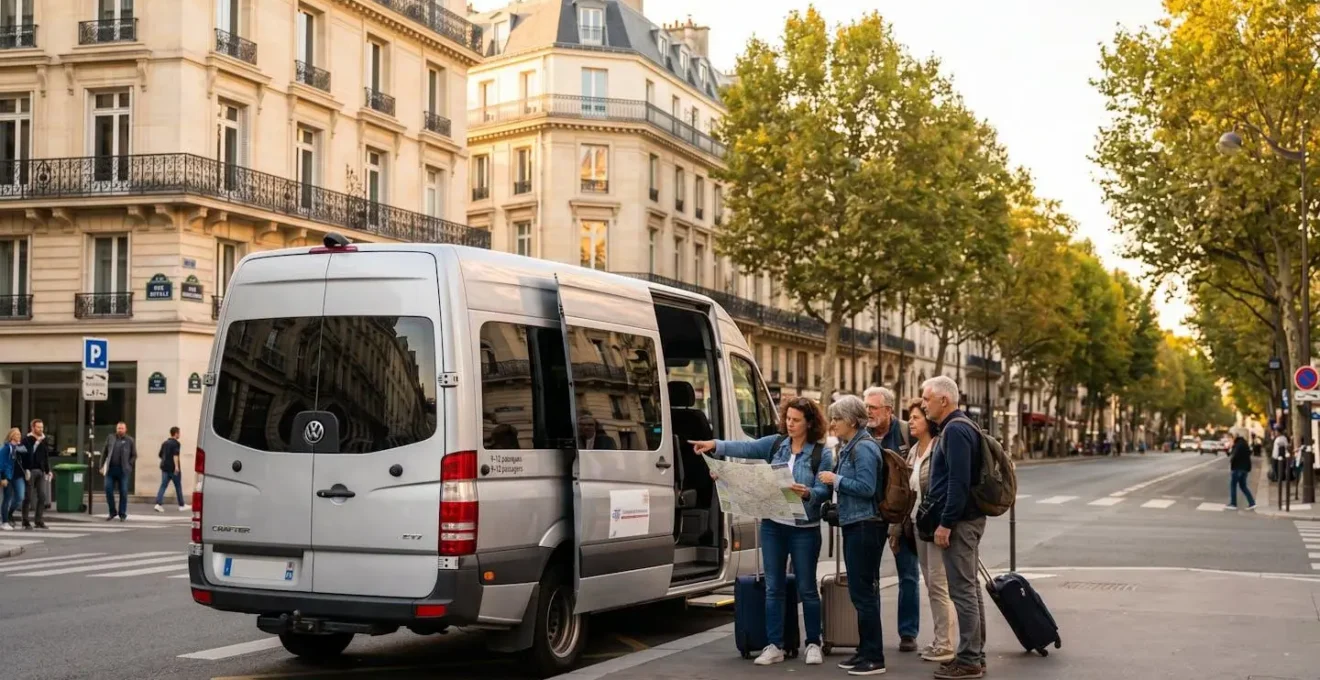
The logistics challenge compounds when groups prioritize popular attractions clustered across different zones. A typical three-day Paris itinerary might include the Eiffel Tower, the Louvre, Versailles day trip, Montmartre, and Latin Quarter dining—each location requiring separate transport coordination when relying on public systems. Metro lines connect these points efficiently for individuals, but managing eight people with luggage through rush-hour transfers introduces delays that cascade through the day’s schedule.
Minibus solutions consolidate these moving parts into a single transport decision. Instead of purchasing multiple metro tickets, coordinating meeting points after each separation, or calculating taxi costs for multiple vehicles, groups secure one vehicle that adapts to their itinerary. This guide examines the practical considerations that determine whether minibus rental suits your Paris visit, which vehicle category matches your group profile, and how booking mechanics work in practice.
Your group transport decision in 90 seconds
- Minibus rentals solve coordination chaos: keep 8-12 people together across Paris attractions without metro transfers
- Pricing varies by vehicle size, season, and rental agency; verify insurance, mileage, and add-on fees for true cost
- Book 4-6 weeks ahead for summer visits; choose self-drive for budget flexibility or chauffeur service for navigation confidence
- EU licenses valid; minimum age 21-25 depending on vehicle; verify Crit’Air vignette compliance for Paris access
Why group sightseeing in Paris demands rethinking your transport strategy?
Splitting a group of ten across metro lines to reach Sacré-Cœur creates predictable friction: missed transfers, luggage struggles on escalators, delayed reassembly. Public transport works brilliantly for solo travelers navigating Paris with minimal baggage, but coordination complexity multiplies exponentially for larger groups moving across arrondissements.
Major attractions span geographically—Eiffel Tower (7th), Notre-Dame (4th), Montmartre (18th), Latin Quarter (5th). Each metro leg requires ticket purchases, platform changes, and crowd management during peak hours. Groups consistently lose 30-40% of available sightseeing time to transport coordination when relying exclusively on public systems—time consumed by waiting, regrouping, and navigating connections rather than experiencing destinations.
Minibus rentals collapse these coordination layers. The vehicle waits where needed. Luggage stays secure throughout the day. Passengers with mobility considerations avoid stair-heavy metro stations. Itinerary changes happen in real time without ticket rebooking. The most frequently overlooked advantage: eliminating the mental load of constantly accounting for every group member across platforms and unfamiliar stops.
Matching your group to the right vehicle
Vehicle selection determines whether your Paris tour feels like a coordinated operation or a cramped endurance test. The decision tree starts with passenger count but quickly branches into luggage volume, driver comfort navigating unfamiliar cities, and budget tolerance for premium services. Many travelers find that booking through a specialized minibus hire branch in Paris-Nord streamlines the process, offering direct access to well-maintained fleets and multilingual staff familiar with tourist itinerary needs. Understanding the categories available allows groups to match vehicle capabilities to their actual requirements rather than defaulting to the first option that technically fits headcount.
Paris-specific considerations influence vehicle choice beyond generic capacity charts. Experienced organizers assess three factors simultaneously: the tightest parking situation your itinerary will encounter, driver experience with European city traffic, and total daily duration in the vehicle. Compact minibuses offer maneuverability advantages that matter more than extra seats when touring central arrondissements with frequent short stops.
| Vehicle Type | Capacity & Comfort | Paris Maneuverability | Ideal For |
|---|---|---|---|
| Compact Minibus (5-9 seats) | Limited luggage space, tighter seating | Easier parking in arrondissements, handles narrow streets well | Small groups, central Paris focus, frequent stops |
| Full-Size Minibus (10-17 seats) | Generous luggage, reclining seats, more headroom | Requires larger parking, périphérique recommended for cross-city travel | Larger groups, day trips to Versailles, luggage-heavy itineraries |
| Chauffeur-Driven (any size) | Professional service, guided navigation | Expert handles all driving and parking challenges | Non-French speakers, high-value time efficiency, stress-free experience |
Rental agencies categorize vehicles by passenger capacity, but real-world comfort depends on usage. An 8-passenger minibus becomes cramped when passengers each bring rolling luggage for multi-day trips. Groups prioritizing full-day comfort spanning 8+ hours benefit from selecting one capacity tier above minimum headcount, while those planning short transfers between nearby attractions can optimize for maneuverability instead.
Fleet quality varies significantly across providers. Well-maintained vehicles feature functional climate control, operational GPS with current Paris maps, and thoroughly cleaned interiors. Quality indicators include transparent disclosure of average vehicle age, emission compliance for Paris’s Low Emission Zone, and customer reviews specifically mentioning vehicle condition.
- If you’re traveling with 5-9 people:
Does your driver feel confident navigating unfamiliar European cities? Yes → Compact self-drive minibus offers maneuverability and cost efficiency (see Compact minibuses section below). No → Compact chauffeur-driven service provides navigation confidence without vehicle size challenges (see Chauffeur-driven section).
- If you’re traveling with 10+ people:
Will you travel beyond central Paris to destinations like Versailles or airport transfers? Yes → Full-size minibus provides space and comfort for extended itineraries (see Full-size options section). No, staying within arrondissements → Full-size with chauffeur recommended to avoid parking stress in tight central areas (see Chauffeur-driven section).
Compact minibuses for smaller groups
Vehicles in the 5-9 passenger range deliver tangible advantages when parking in central arrondissements during midday. Standard car parking spaces accommodate these compact minibuses, whereas larger vehicles require bus-designated areas or peripheral zones adding walking distance. Maneuverability through streets like Rue Mouffetard favors smaller profiles, particularly for itineraries with frequent stops.
Luggage capacity represents the primary trade-off. Compact configurations typically provide limited rear storage, suitable for day touring with minimal bags but challenging for airport transfers with full-size suitcases.
Full-size options when space matters
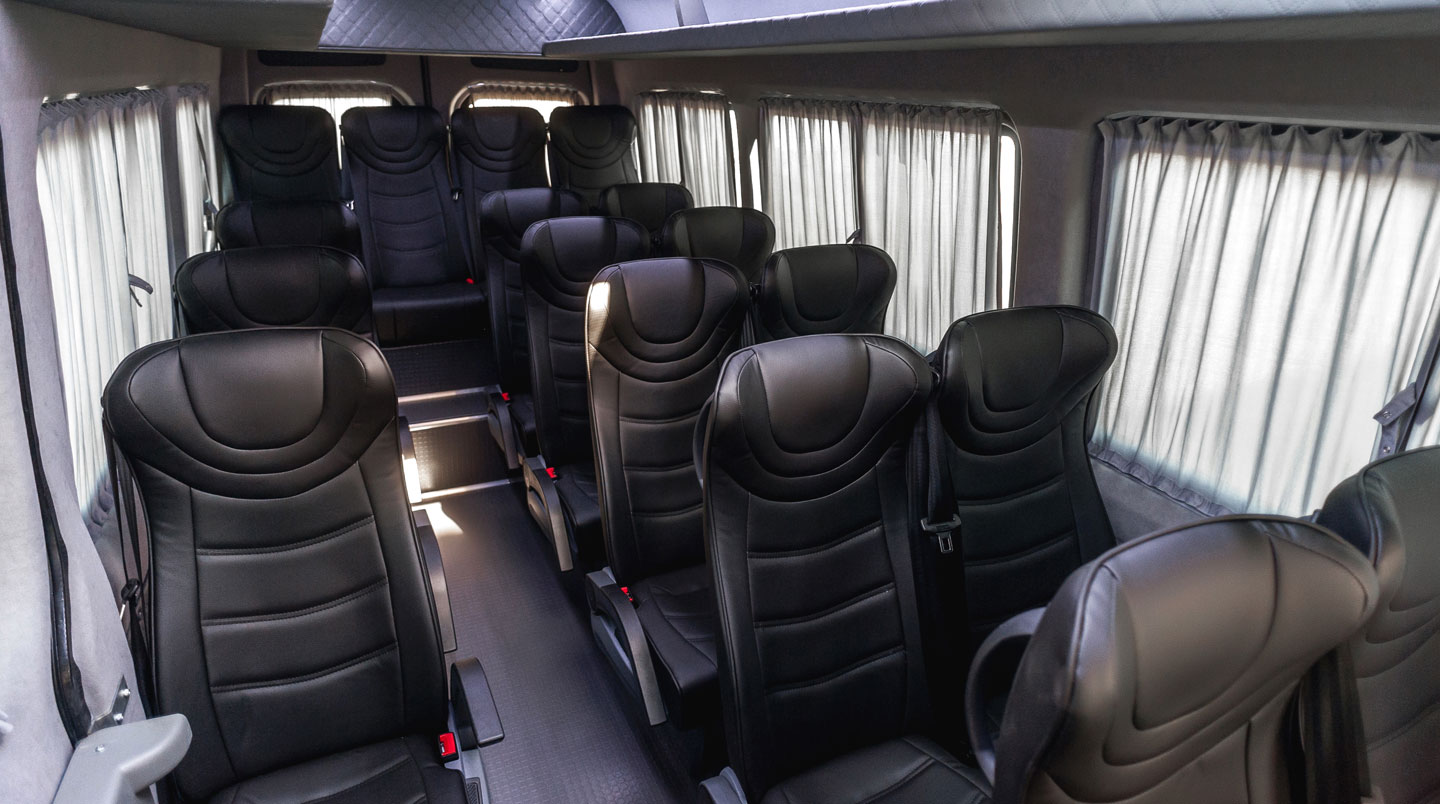
Minibuses seating 10-17 passengers shift toward comfort and capacity, ideal for multi-day itineraries where luggage, comfort features, and extended vehicle time justify reduced maneuverability. Reclining seats, increased headroom, and climate control systems reduce fatigue during full-day tours including Versailles visits and evening river cruise departures.
The périphérique becomes the preferred route for cross-city travel in full-size vehicles, bypassing congested central arteries. This works well connecting geographically distant points but requires more planning for tightly clustered arrondissement attractions. Parking near major sites often requires paid garages rather than street spaces, adding costs but simplifying logistics.
Chauffeur-driven versus self-drive rentals
Professional driver services add 40-60% to base costs in exchange for eliminating navigation stress and leveraging local route knowledge. Chauffeurs adjust itineraries dynamically—avoiding construction zones, selecting optimal approach routes, handling parking challenges. For groups where no member feels confident driving in unfamiliar European contexts, this premium converts potential stress into seamless execution.
Self-drive options maximize budget flexibility and itinerary control. Total costs drop significantly, and spontaneous detours happen without negotiating driver changes. The calculation favors self-drive when at least one group member has European city driving experience and the itinerary allows time buffers absorbing occasional navigation recalculations.
What you’ll actually pay and what’s included?
Pricing structures layer multiple components determining total outlay. Daily rates form the starting point, but final invoices reflect insurance tier selection, mileage policies, fuel arrangements, additional driver fees, and equipment add-ons like GPS units or child seats. Advertised base rates typically cover the vehicle and basic third-party liability insurance—everything else appears as line items during booking.

Industry data from Groupito’s 2025 consolidated pricing analysis of 2,022 actual vehicle rental transactions shows midibus pricing (21-35 seats) averaging 839 € daily, with seasonal variation adding up to 26% during peak months of May and June. Smaller minibuses in the 9-12 passenger range typical of tourist bookings show significant rate variation depending on vehicle age, features, and rental agency positioning. Multi-day bookings often unlock discounts of 15-25% versus single-day rates.
Insurance excess—the deductible you remain responsible for in case of damage—varies by provider and coverage tier. Agencies offer excess reduction or waiver packages that increase daily rates but cap financial exposure. Fuel policies vary: full-to-full contracts require returning the vehicle with a full tank, while prepaid fuel options let you return empty but typically charge above local pump rates. Security deposits, held via credit card authorization, are refunded within 7-14 days post-rental if no damage occurs. Mileage policies split between unlimited allowances and capped limits with per-kilometer charges beyond thresholds.
Cost verification checklist: Before finalizing any booking, confirm these line items are addressed in your quote: insurance excess amount, mileage allowance (unlimited or capped), fuel policy (full-to-full or prepaid), additional driver fees if applicable, GPS or child seat rental charges, pickup and dropoff location surcharges, and deposit hold requirements. Transparent providers itemize these upfront; vague quotes often signal hidden fees appearing at the rental counter.
Securing your booking without the usual headaches
Advance reservation timing significantly impacts vehicle availability and rates. Peak tourist seasons in Paris—June through August, plus major events like Fashion Week—see rental inventory tighten. Experienced organizers typically recommend securing vehicles 4-6 weeks ahead for summer travel, allowing access to full fleet selection and early-booking discounts. Last-minute bookings remain possible during shoulder seasons (April-May, September-October), but vehicle choice narrows and rates rise.

Modification and cancellation policies vary by provider but commonly allow free changes up to 48-72 hours before scheduled pickup. Some agencies extend this flexibility—free cancellation up to 30 days before pickup, for instance. Reading these terms carefully during booking prevents surprises if itinerary changes force adjustments. Refund processing typically takes 7-14 business days.
- Valid driving license: EU licenses are accepted directly; non-EU licenses may require an International Driving Permit depending on agency policy
- Government-issued photo ID or passport for identity verification
- Credit card in the primary driver’s name for security deposit authorization hold
- Booking confirmation number, accessible via email or printed copy
- Additional driver’s license if planning to share driving responsibilities during the rental period
- Insurance policy documentation if using personal coverage instead of rental agency insurance
Pickup locations cluster around major transport hubs—Gare du Nord, Charles de Gaulle Airport, Gare de Lyon—offering convenient access for groups arriving by train or air. Branch operating hours typically span 8:00-19:00 on weekdays, with reduced weekend hours. Vehicle handover includes walkaround inspection documenting existing damage, verification of controls and dashboard indicators, and confirmation of return deadline and fuel policy. The process typically requires 20-30 minutes.
Paris’s Low Emission Zone (ZFE) adds a regulatory layer that rental fleets handle proactively. The official Ville de Paris Low Emission Zone regulations require vehicles to display a Crit’Air vignette to operate within the metropolitan area inside the A86 motorway perimeter. Since January 1, 2025, Crit’Air 3, 4, and 5 classifications face circulation restrictions. Reputable rental agencies maintain fleets meeting current emissions standards, providing compliant vehicles with vignettes already affixed. Verify this compliance during booking confirmation to avoid potential complications—though a pedagogical period without financial sanctions extends through December 31, 2026, confirming vignette presence eliminates any uncertainty.