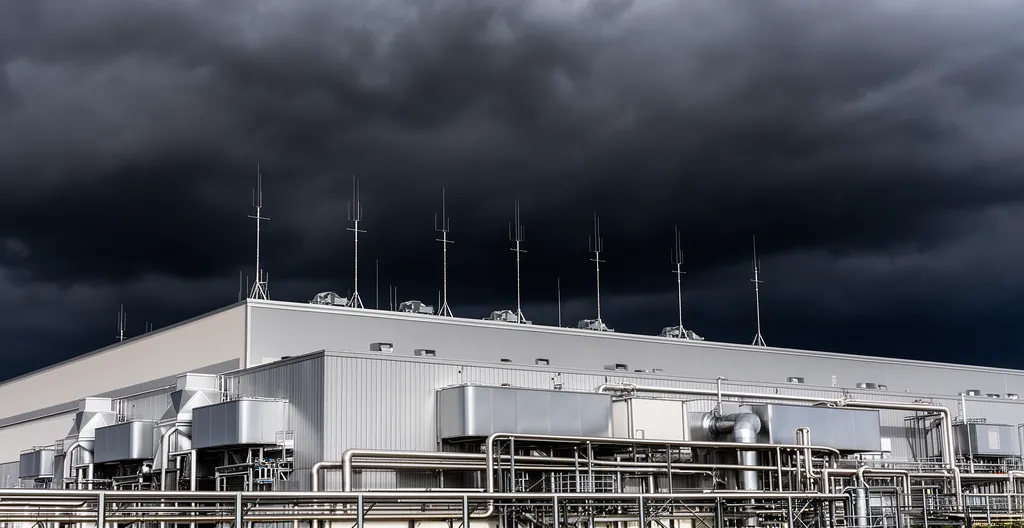
That call nobody wants. Production halted. Control systems unresponsive. The PLC cabinet still smoking. I took a call like this from a chemical processing facility manager last year—a single lightning event had cascaded through their control network, triggering a regulatory investigation that lasted months. The direct damage ran into six figures. The production losses dwarfed that. When I review incidents like this, the pattern is almost always the same: protection that looked adequate on paper but failed to account for how industrial operations actually work.
- Industrial facilities face unique vulnerabilities from large metal structures, sensitive control systems, and continuous operations
- Production downtime costs between $10,000 and $250,000 per hour depending on industry sector
- BS EN IEC 62305 provides the compliance framework—COMAH sites have additional mandatory requirements
- Structural protection alone is insufficient; coordinated surge protection for electronics is essential
What’s covered
What Makes Industrial Buildings Uniquely Vulnerable to Lightning
$10,000–$250,000/hour
Production downtime cost range for industrial facilities experiencing lightning-related system failures
Your facility isn’t a house. It isn’t even a typical commercial building. Industrial structures present a fundamentally different risk profile that standard protection approaches often miss. Large metal roofing, towering exhaust stacks, external pipework, and elevated process equipment all act as preferential strike points. According to analysis from Skytree Scientific, the downtime costs alone dwarf what residential or commercial properties face—we’re talking figures that can exceed a quarter of a million dollars for every hour of lost production in high-value manufacturing.
The real vulnerability goes deeper. I’ve assessed dozens of facilities where the external protection looked textbook-compliant, yet the internal systems remained exposed. Here’s the problem: modern industrial operations run on networked control systems, PLCs, SCADA interfaces, and precision instrumentation. A lightning strike doesn’t need to hit your building directly. Induced surges travelling through power lines, data cables, or even ground potential rise can destroy sensitive electronics hundreds of metres from the strike point.
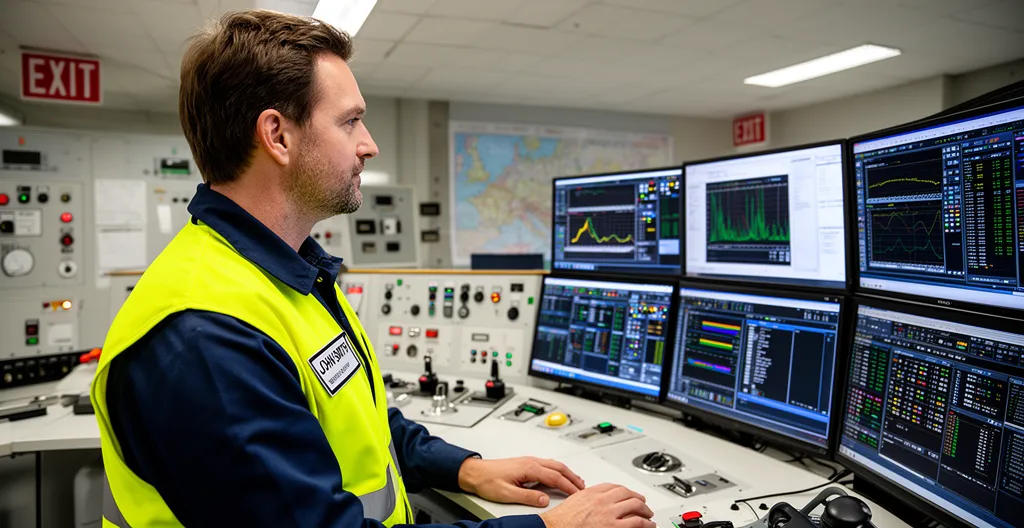
The most common oversight I encounter? Facilities that upgraded production equipment over the years without corresponding updates to electrical protection. The CNC machine from 2008 might have tolerated transient voltages that would instantly destroy the 2024 replacement. When working with facility managers, I observe this mismatch constantly—legacy protection designed for legacy equipment, now tasked with protecting systems it was never specified for.
Unique industrial risk factors: Metal roofing and structures create preferential strike points. Continuous 24/7 operations mean any interruption cascades immediately. Networked control systems create multiple vulnerability pathways beyond the strike point itself.
The Real Costs When Lightning Protection Fails
Let me describe a case I dealt with in 2024. Seveso-classified facility. Chemical processing. They’d maintained their structural lightning protection system for fifteen years—regular visual inspections, earth resistance testing, the works. What they hadn’t done was coordinate surge protection for the distributed control systems installed during a 2019 upgrade. Summer thunderstorm. Not even a direct strike—an induced surge through the power supply.
When protection gaps become operational crises
I was brought in after the regulatory investigation had already begun. The PLC failure had triggered an emergency shutdown—correct safety response, but now the facility faced questions about their protection adequacy. Direct equipment costs ran to approximately £80,000. Production shutdown lasted eleven days. The regulatory attention and subsequent remediation requirements? That’s where the real expense accumulated. The facility manager told me he’d assumed his protection was comprehensive. It was comprehensive—for 2009.
Insurance data tells a similar story. According to claims analysis from Liberty Insurance, a single lightning event at an electronics manufacturing facility generated a claim exceeding $200,000—combining control system replacement, reprogramming costs, and two weeks of business interruption. One strike. Facility-wide impact.
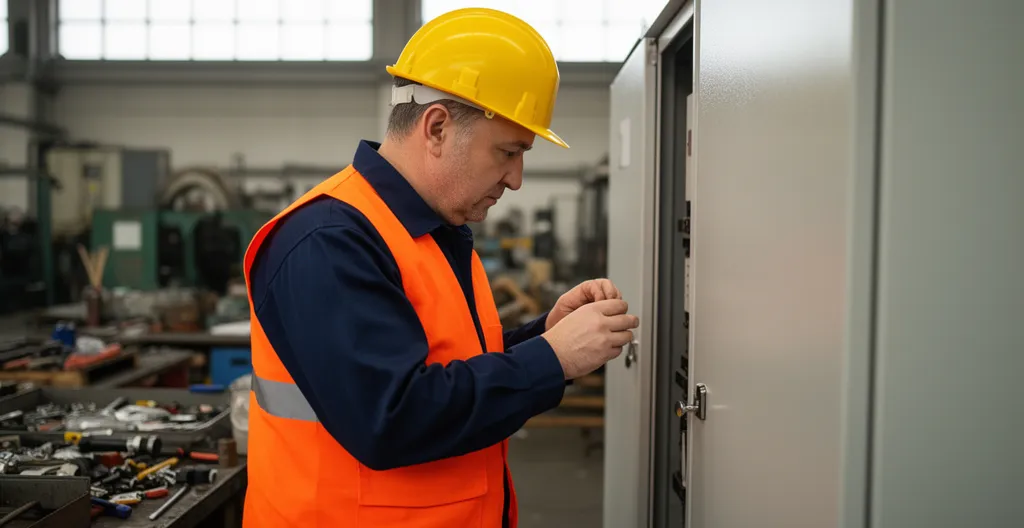
Insurance coverage risk: Claims may be contested if protection systems are documented as non-compliant with applicable standards, or if maintenance records show gaps. The protection system you installed isn’t enough—you need evidence you maintained it.
Recovery isn’t quick. The cases I’ve reviewed show a consistent pattern.
-
Lightning event detected, initial system shutdown -
Equipment inspection and damage assessment -
Replacement component procurement (assuming availability) -
System restoration, testing, and verification -
Insurance claim processing and regulatory follow-up
That’s two weeks minimum before full operations resume. Some facilities I’ve worked with were down for over a month waiting for specialised control components. If your operations rely on key practices for ESD safety, you already understand how sensitive modern electronics are—lightning-induced transients are orders of magnitude worse than routine electrostatic discharge.
Standards and Compliance: What Your Facility Actually Needs
I always recommend starting with a formal risk assessment before any equipment purchase. Not because regulators require it (though they often do), but because it’s the only way to know what protection level you actually need. BS EN IEC 62305 provides the framework, and according to the ATLAS lightning protection committee update, the latest revision simplifies the risk assessment process while introducing strike point density as the new measurement standard.
The regulatory picture varies by facility type. Not every industrial building requires lightning protection by law. But specific regulations change that calculation entirely.
| Facility Type | Primary Regulation | Lightning Protection Status | Key Requirements |
|---|---|---|---|
| COMAH Upper Tier | COMAH 2015 | Mandatory | Lightning in safety case, demonstration of adequate protection |
| Explosive Atmospheres | DSEAR 2012 | Mandatory | Protection preventing ignition sources in hazardous zones |
| General Manufacturing | General duty of care | Risk-based | Assessment per BS EN 62305-2, protection where risk exceeds tolerable level |
| Data Centres | Industry standards | Strongly recommended | Enhanced surge protection, redundant earthing systems |
As HSE guidance OG-00044 makes clear, lightning strikes can initiate major accidents at hazardous installations. The guidance explicitly states that established engineered measures—proper lightning protection systems with coordinated surge protective devices—may obviate the need for complex assessment, but the burden of demonstrating adequacy falls on the operator.
Organisations exploring comprehensive lightning protection for industrial buildings typically need both external protection (air terminals, down conductors, earthing) and internal protection (surge protective devices coordinated across power and data networks). One without the other leaves gaps. Soyons clairs—I’ve seen facilities with beautiful external systems that still lost control equipment because nobody addressed the transients entering through data cables.
Protection adequacy self-assessment
-
Confirm formal risk assessment conducted per BS EN 62305-2 within last 5 years -
Verify external LPS inspection records current (visual annually, comprehensive per risk level) -
Check surge protective devices installed at main distribution board and sub-boards -
Confirm SPD coverage includes data and control system cabling, not just power -
Document that protection scope covers equipment installed after original LPS design
This list isn’t complete—specialist assessment covers factors specific to your site. But if you’re answering “no” or “don’t know” to multiple items, that’s your signal to engage qualified support before the next storm season.
Your Questions About Industrial Lightning Protection
Your questions on industrial lightning protection
Does lightning protection have to be installed by law?
Not universally. General industrial buildings have no blanket legal requirement. But COMAH-regulated sites, facilities with explosive atmospheres under DSEAR, and certain other categories face mandatory requirements. Even without legal obligation, general duty of care and insurance conditions often make protection a practical necessity.
How much does comprehensive industrial protection cost?
Industry analysis suggests comprehensive systems range from roughly $77,000 to $375,000 for typical industrial facilities, depending on size, complexity, and protection level required. Set that against potential hourly downtime costs of $10,000–$250,000, and the arithmetic becomes clearer. The protection pays for itself quickly if it prevents even one significant event.
Our system was installed fifteen years ago. Is it still adequate?
Probably not for your current operations. The system may still provide structural protection, but production equipment and control systems have likely changed substantially. I recommend reassessment whenever significant equipment upgrades occur, or at minimum every five years. Standards themselves evolve—the latest BS EN IEC 62305 revision introduces different measurement approaches that may affect your assessed risk level.
What maintenance is required to keep protection systems effective?
BS EN 62305-3 specifies inspection frequencies based on protection level—visual inspections annually at minimum, comprehensive testing including earth resistance measurements at intervals from one to four years. Surge protective devices also require periodic checking, as they degrade after absorbing transients. Maintenance records matter for insurance purposes; gaps in documentation can affect claim outcomes.
For facilities considering comprehensive building protection upgrades, exploring roofing innovations for best protection provides additional weatherproofing context beyond lightning-specific systems.
The next step for your facility: Rather than concluding with generic advice, I’d suggest a specific action. Pull your last risk assessment documentation. Check when it was conducted and what equipment existed at that time. If your control systems, production lines, or building structure have changed since—you already know what conversation needs to happen next.
Site-Specific Assessment Requirements
This guide provides general principles; each industrial site requires individual risk assessment by qualified professionals. Regulatory requirements vary by jurisdiction, industry sector, and hazard classification. Protection system specifications depend on local lightning density data and building characteristics.
- Risk of non-compliance penalties if protection systems do not meet applicable standards
- Risk of insurance claim rejection if damage occurs with inadequate documented protection
- Risk of operational shutdown if lightning event damages critical systems without proper surge protection
Consult a certified lightning protection specialist or accredited inspection body (e.g., IET-registered engineers, ATLAS members) for site-specific assessment.