
Your contractor suggested removing the original brick chimney. The big-box store package could not accommodate it. Three weeks into planning, you are back to square one. This scenario plays out across Ottawa every month, particularly in homes built before 1985. If you are exploring custom renovation solutions that respect your home’s character while meeting your family’s needs, learn more here about how tailored approaches differ from off-the-shelf packages.
What Sets Custom Renovation Apart in Ottawa Homes
Standard renovation packages assume predictable room dimensions, uniform ceiling heights, and modern infrastructure placement. Ottawa’s housing stock tells a different story. Split-levels from the 1970s, century homes in Centretown, and post-war bungalows in Nepean each present layouts that generic solutions struggle to address.
According to CIBC’s 2024 renovation survey, 63% of Canadians undertake renovations to create a home matching their taste. That ambition collides with reality when pre-designed cabinet runs miss existing plumbing by six inches.
Centretown Kitchen Renovation: Preserving Character While Modernizing
A couple in their late 40s with two teenagers purchased a century home in Centretown with an $85,000 CAD kitchen renovation budget (2023). Their initial contractor proposed removing the original brick chimney because the standard cabinet line could not work around it. They sought a custom alternative. The tailored solution preserved the chimney as a design focal point, adding $12,000 to the project cost. Result: the home’s appraisal value increased by $38,000. The feature that almost disappeared became the kitchen’s defining element.
Ottawa Housing Stock Reality: Many Ottawa homes built between 1960-1985 feature non-standard ceiling heights, irregular room angles, and HVAC placement that conflicts with modern cabinet dimensions. Custom solutions account for these variables during design, not during demolition.
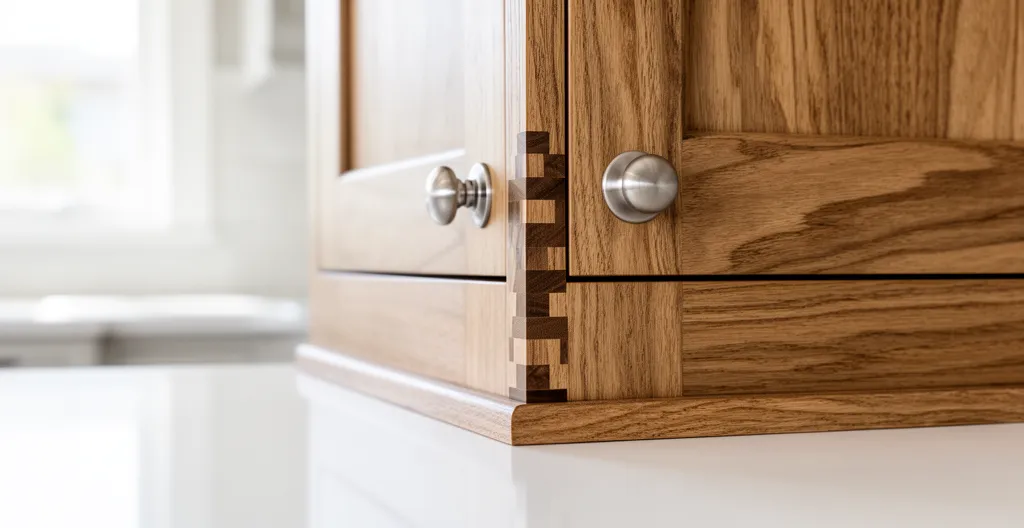
My direct opinion: if your home was built before 1985, requesting a custom site assessment before accepting any renovation quote is not optional. It is protection. The projects I have completed show that ten minutes of measurement can prevent thousands in change orders.
Three Reasons Ottawa Families Invest in Personalized Solutions
Renovations that save prospective buyers money post-sale deliver around 70-80% ROI, according to RE/MAX Canada’s 2025 analysis. Custom work that addresses specific home deficiencies—rather than generic upgrades—tends to reach the higher end of that range.
70-80%
ROI range for quality home renovations in Canada (RE/MAX 2025)
Three factors drive Ottawa families toward personalized approaches:
- Climate adaptation: Ottawa’s freeze-thaw cycles stress building materials differently than milder regions. Custom solutions specify appropriate insulation grades and moisture barriers for local conditions.
- Heritage preservation: Original architectural features—transom windows, built-in cabinetry, decorative millwork—often add more value preserved than removed.
- Space maximization: Non-standard layouts in older homes benefit from made-to-measure solutions rather than forcing standard modules into irregular spaces.
In my experience working on Ottawa-area homes built before 1980, homeowners frequently select standard cabinet packages without verifying existing plumbing and electrical positions. This oversight typically adds $2,800-4,500 CAD for infrastructure relocation. This observation is limited to pre-1980 Ottawa-area homes. Costs vary based on construction era and previous renovation history.
Kitchen renovations in Ottawa typically range from $25,000 to $80,000, with most homeowners investing between $35,000-$55,000 for a complete mid-range renovation, according to Justyn Rook Contracting’s 2025 cost data. Custom projects may fall at the higher end, but the gap narrows when you factor avoided change orders.
- Design adapts to existing infrastructure—fewer surprises during demolition
- Materials specified for Ottawa climate conditions
- Heritage features preserved as value-adding elements
- Layout optimized for your family’s actual routines
- Higher upfront design fees ($1,500-3,500 typical)
- Longer planning phase (3-5 weeks vs 1-2 weeks)
- Fewer contractor options—requires specialized skills
- Lead times for custom millwork extend project duration
- Week 1-2 Initial consultation and site assessment
- Week 3-5 Design development and material selection
- Week 6-7 Permit applications and contractor scheduling
- Week 8-14 Demolition and construction phase
- Week 15-17 Finishing, installation, and final walkthrough
The timeline above reflects mid-range custom kitchen projects in Ottawa residential areas (2024-2025 data). Worth noting. Upgrades to mechanical systems can extend or reduce this window significantly. Understanding your home’s plumbing upgrades for modern renovations before demolition prevents mid-project discoveries.
How to Evaluate Whether Custom Renovation Fits Your Project
Does custom always mean expensive? Not necessarily. A $40,000 standard package that requires $8,000 in modifications costs more than a $45,000 custom solution designed correctly from the start. The question is not about budget category—it is about fit.
Custom renovation makes sense when your home presents specific conditions. It does not make sense for every project. That distinction matters.
When Custom Renovation Justifies the Investment
- If your home was built before 1985: Non-standard dimensions and outdated infrastructure placement typically require custom solutions
- If you are preserving architectural features: Standard packages often cannot accommodate original elements worth saving
- If previous renovations created irregular layouts: Custom design addresses inherited complications
- If you plan to stay 7+ years: Long-term satisfaction justifies higher upfront investment
Ottawa maintains a $110 minimum permit fee structure with renovation permits calculated at 1.1% of construction value plus $1.06 per square foot, according to Builders Ontario’s 2025 Ontario Building Code requirements. Permit costs remain consistent whether you choose custom or standard approaches—the difference shows in execution quality.
Evaluate Your Custom Renovation Readiness
- Your home features non-standard room dimensions or ceiling heights
- Previous contractors have noted infrastructure placement challenges
- You value specific architectural features worth preserving
- Your renovation budget includes 15-20% contingency for discoveries
- You can accommodate a 3-5 week design phase before construction
My direct opinion: if you checked three or more items above, standard packages will likely frustrate you. Difficult to quantify precisely, but the projects I have completed show that homeowners who force standard solutions into non-standard homes report lower satisfaction—even when the work itself meets specifications.
Window selection illustrates this principle well. Standard replacement windows fit standard openings. Older Ottawa homes rarely have standard openings. Exploring modern windows for home value becomes more straightforward when you work with contractors who expect—and plan for—deviations from catalog dimensions.
The real question now: does your home’s history support off-the-shelf solutions, or does it demand something built around its specific character? Your contractor’s answer to that question reveals their approach. The answer you accept determines your outcome.